
Behind the scenes
How this game is made
The roads are drawn by code, and the soundtrack is performed live. A tour of how SG Bumper Cars gets built.
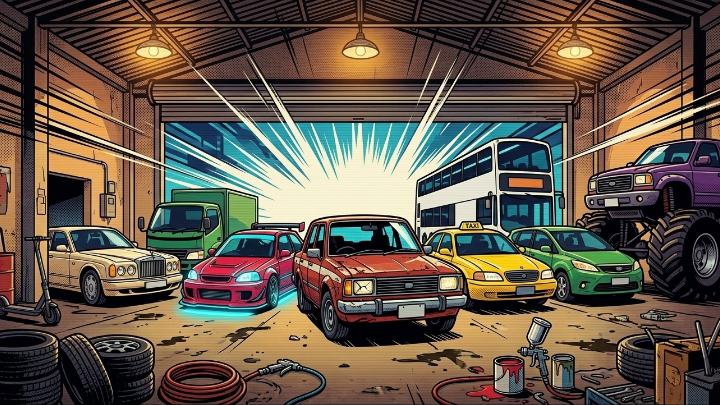
SG Bumper Cars is built the kopitiam way: everything made fresh, on the spot. Here is the kitchen.
Everything on the road is drawn by code
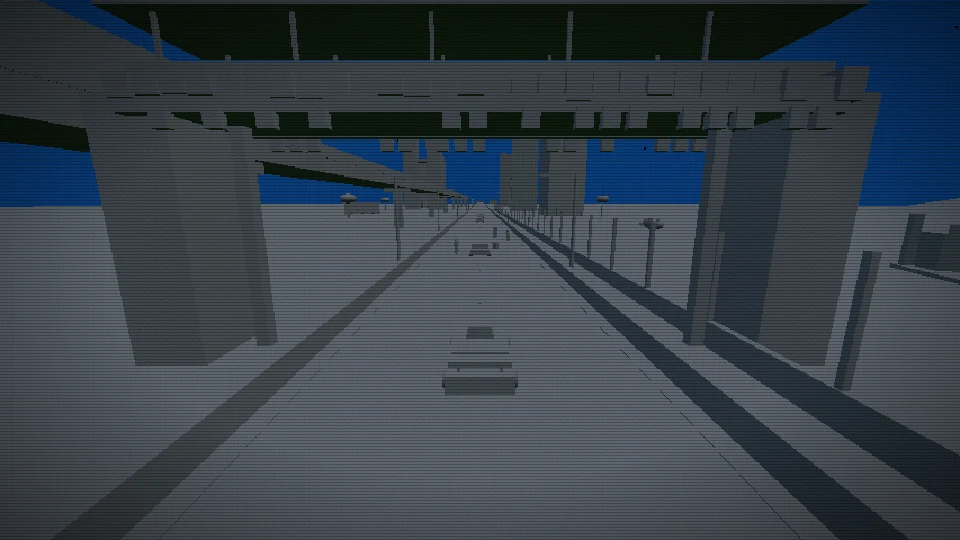
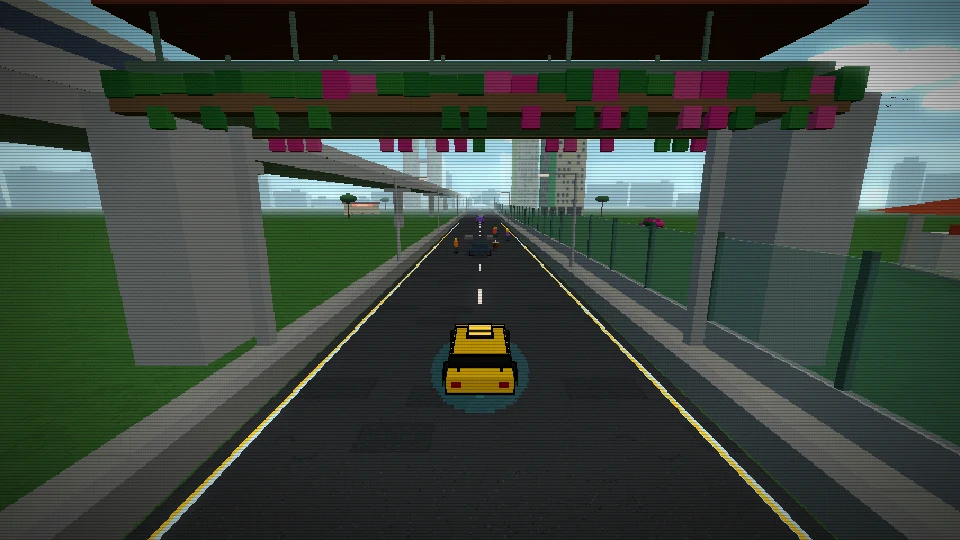
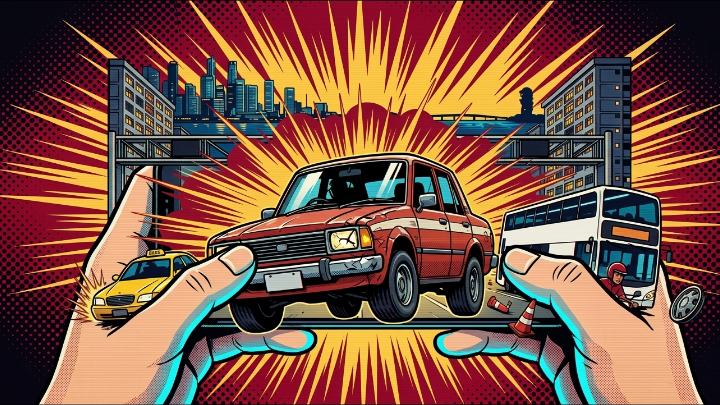
Every car and building is assembled live from plain boxes and cylinders, and every road surface, shop sign and HDB facade is painted by code as a level loads. The menu icons are ten-by-ten grids of pixels placed by hand, and even the brag cards are drawn on the spot. The one picture the game ships is the taxi uncle on the title screen, which is why so little has to download before you can drive, even on one bar of signal on a bus in Yishun.
The chunky look is a decision, not a limitation. The scene is drawn small and blown up with hard pixel edges, under a real sky with a sun, a moon, stars and storm clouds. The nights are lit, the rain leaves the road wet, and the cars are shaded like cartoons, with a black outline on yours and on the bosses so the eye finds them first. On top sits an arcade finish: a chunky glow on bright lights and a colour grade for each chapter.
The voice cast is written twice
Over 1,300 Singlish lines ship with the game, and most exist in two forms: what the screen shows and what the voice performs. The screen can write KNN, because that is how the curse is typed, but the uncle says kanina, because nobody says the letters. The screen squeezes RM8,000 into a cramped banner; the voice reads it out in full. A stage direction in asterisks is never read aloud: it is performed as the noise it describes.
The performances are AI text-to-speech, not human actors. The words are written by hand, and each character gets written acting notes that the voice model follows line by line.
If a clip is ever missing, your device's own text-to-speech steps in, because the one unbreakable rule of the audio is that the game is never silent. Meet the whole cast on the cast page.
The music is played, not played back
There is no recorded soundtrack. A small sequencer in the code performs the music live while you drive: three soundtracks to choose from, each with seven moods from the menu to the boss fight, plus a respectful off switch. When the boss theme kicks in, the band is the code, and it is playing your level.
28 levels, one new problem at a time
The campaign follows a written rule: difficulty rises steadily, each level brings at most one new threat, and every spike is followed by a breather. Boss levels quietly ease the surrounding traffic, because you are busy, and each phase of a boss fight has its own pool of taunts, so a boss down to his last sliver of health stops sounding smug.
The homework
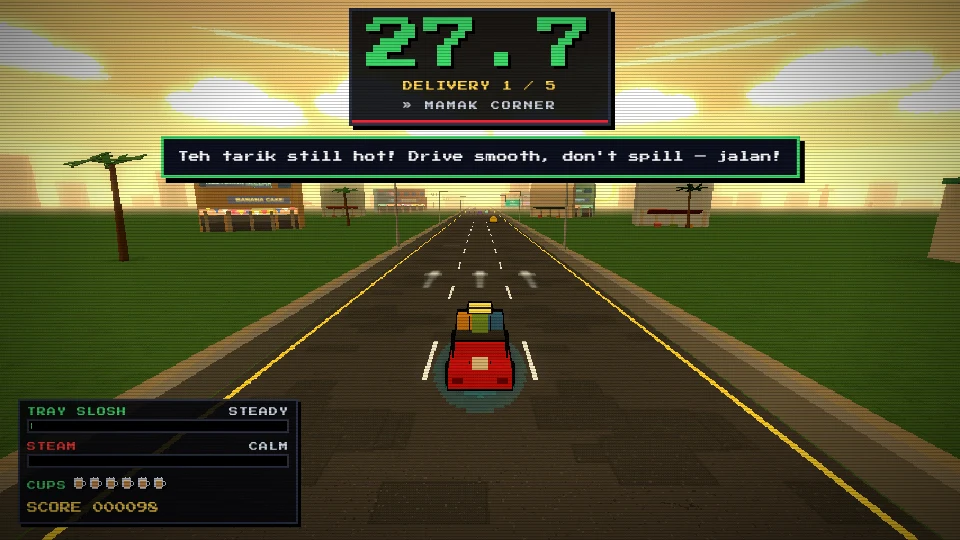
Nearly every level starts from a real Singapore news story, checked before it is built, with the sources on The Real Story and Road Safety Facts. The bonus modes get the same treatment. Mabuk Express is tuned to published motion science: nausea peaks at around 0.2 Hz of fore-and-aft surging, roughly one push every five seconds. The Teh Tarik Run carries a simulated tea surface that tilts with every brake, so a smooth driver arrives with full cups and a hero arrives with none.
One build, everywhere
The browser game and the Android app are the same build: the app wraps the web version in a native shell, and there is no lesser version.
That is the kitchen. Now go and drive, and if a taxi uncle heckles your following distance, know that the line was written and performed specifically so it could find you.
Free on Google Play
Put uncle in your pocket
- Plays offline. The whole game and every voice line install with it.
- Its own icon on your home screen, and no browser bar.
- Optional reminders before your Daily streak runs out.

On iPhone and iPad
Put it on your home screen
- The browser version is the whole game, touch controls and all.
- Open the game in Safari, tap Share, then Add to Home Screen.
- It gets its own icon and opens full screen, like an app.